Two Feet of Water in Westport Lobby as Stormwater Project Shakes Neighborhood
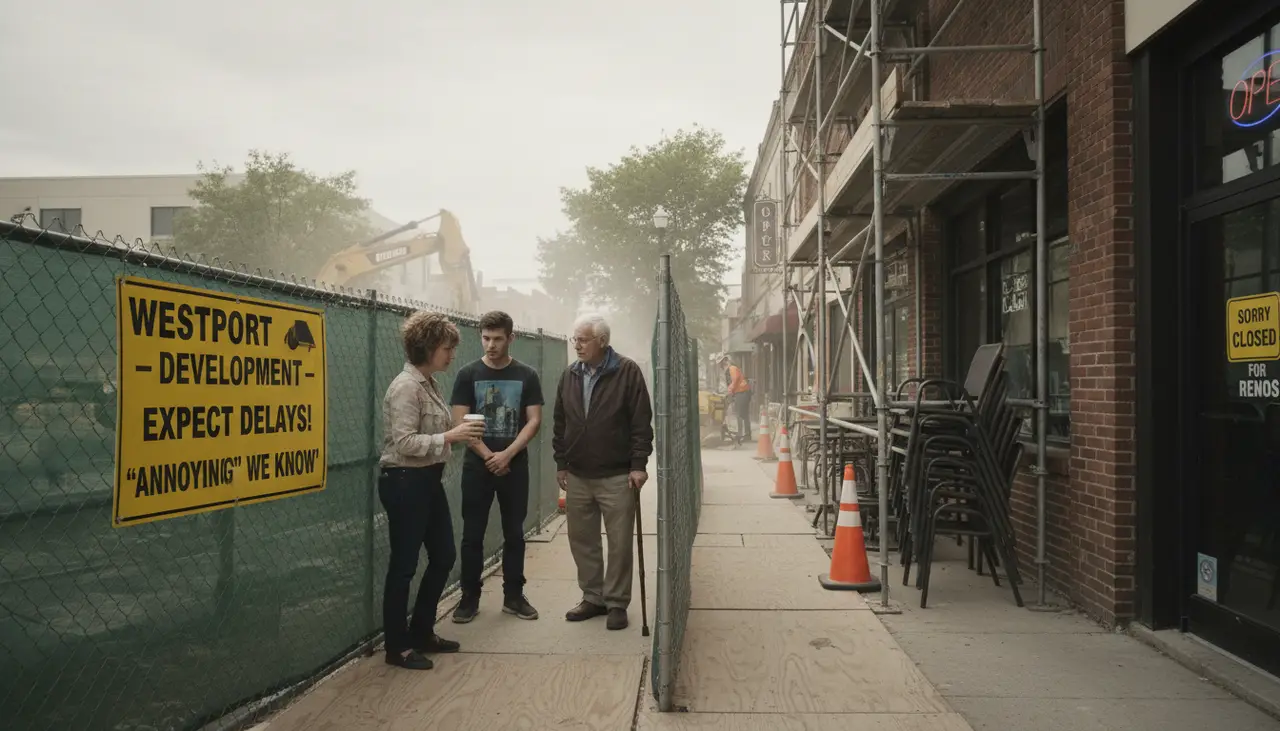
It’s just after 7 a.m. on Mill Street in Westport, and David Hutchins stands outside The Big Biscuit at 4039 Mill Street, watching crews maneuver heavy equipment along the narrow street. The air smells of fresh concrete and damp earth. Just a few blocks away, at the intersection of 43rd Street and Broadway Boulevard, the parking lot of Cosentino’s Sun Fresh Market bears the marks of ongoing construction. The Westport Stormwater Improvement Project, launched this January, has transformed the neighborhood’s streets and sidewalks into a maze of barriers and detours—but for Hutchins and his neighbors, the disruption is far from the only concern.
What Happened: A Neighborhood Underwater and Under Construction
Westport’s long-standing flooding problem has reached a breaking point. Recently, Hutchins’ apartment complex lobby was flooded with nearly two feet of water, pooling dangerously close to electrical outlets. This flood isn’t an isolated incident—it’s part of a pattern that the city is scrambling to address through the Westport Stormwater Improvement Project.
Started in January, this project aims to overhaul the neighborhood’s stormwater infrastructure. It includes nearly one mile of new storm sewer piping and the construction of two reservoirs, each capable of holding over one million gallons of water. These reservoirs are critical to controlling the severe flooding that has plagued the area since the 19th century, when old Westport was first developed without modern drainage systems.
The project’s timeline is tight and layered. Reservoir construction is scheduled for completion by April, while sidewalks, curbs, and driveways should be finished by May. Temporary pavement restoration is expected by the end of May, with final pavement work delayed until October. This phased approach means residents and businesses like The Big Biscuit and New Peking Restaurant are facing months of noisy, dusty, and sometimes dangerous construction conditions.
Why This Matters Locally: Flooding, Safety, and Daily Disruption
Westport residents are living through a difficult trade-off. On one hand, the stormwater upgrades are necessary to prevent future floods like the one that soaked Hutchins’ building lobby. On the other, the construction itself is causing significant stress and inconvenience. Streets are partially closed, sidewalks are torn up, and parking is limited—impacting local businesses and daily commutes.
The flooding poses immediate safety risks. Water near electrical outlets in residential buildings creates a serious hazard for residents and visitors. Beyond physical danger, flooding can cause costly property damage, mold growth, and long-term structural issues. For homeowners and renters alike, ignoring these risks could lead to expensive repairs and health concerns.
Traffic delays and detours around key intersections such as 43rd Street and Broadway Boulevard add to daily frustration, increasing commute times and complicating access to essential services. Local businesses report losses as customers avoid the construction zones, and residents worry about how long these disruptions will last.
If This Happens to You: What to Do Immediately
- 1. Evacuate the flooded area if water is near electrical outlets or appliances to avoid electrocution.
- 2. Turn off the main electrical breaker in your home if it is safe to do so, to prevent electrical hazards.
- 3. Contact your landlord or property manager immediately to report the flooding and request urgent repairs.
- 4. Document the damage with photos and videos for insurance and legal purposes.
- 5. Avoid using any water-damaged electrical devices or outlets until they have been inspected by a professional.
- 6. Notify your insurance company promptly to begin the claims process.
- 7. Stay informed about construction updates and road closures in your area to plan safe travel routes.
When Local Professional Help Becomes Necessary
Flooding and construction damage quickly escalate beyond DIY fixes. You need to contact professionals without delay in these situations:
- Electricians: If water has reached electrical outlets or appliances, a licensed electrician must inspect and repair your electrical system to prevent fire or electrocution risks. Do not attempt to restore power yourself.
- Restoration Companies: Water damage can lead to mold and structural decay. Certified restoration experts should assess and remediate affected areas to protect your home’s integrity and your family’s health.
- Contractors and Plumbers: If flooding has damaged your home’s plumbing or foundation, or if you notice persistent leaks or drainage problems, professional contractors must evaluate and repair these issues to prevent worsening conditions.
Delaying professional intervention risks escalating repair costs, prolonged displacement, and serious safety hazards. Time is critical—especially with ongoing construction that may further impact your property.
Close to Home: Westport’s Streets and Residents Feel the Impact
Westport is a historic neighborhood where many Kansas City residents live, work, and socialize. Streets like Mill Street, 43rd Street, and Broadway Boulevard are daily routes for thousands. Local landmarks such as Cosentino’s Sun Fresh Market and popular eateries like The Big Biscuit and New Peking Restaurant are cornerstones of the community.
The stormwater project is necessary to protect this beloved neighborhood from future flooding, but the current disruptions and hazards are a sharp reminder of how infrastructure challenges affect real lives. Residents need to stay alert, take precautions, and know when to seek professional help as the project unfolds through October.
Where This Is Happening in Kansas
The Westport Stormwater Improvement Project spans key parts of the Westport neighborhood, focusing on areas around Mill Street and the intersection of 43rd Street and Broadway Boulevard. This includes the parking lot of Cosentino’s Sun Fresh Market, a local landmark, and the vicinity of The Big Biscuit at 4039 Mill Street. Residents and commuters traveling through these corridors should expect ongoing construction, partial street closures, and traffic disruptions over the next several months.
Westport’s narrow streets and historic layout make this project complex, with nearly a mile of new storm sewer piping being installed. Sidewalks, curbs, and driveways in the area will be reconstructed, causing temporary inconvenience but aiming to secure the neighborhood’s safety and property values in the long term.