Bruce R. Watkins’ Warning Echoes Through Kansas City Streets Decades Later
It’s 5:30 p.m. on a cold winter evening at the intersection of 31st Street and Bruce R. Watkins Drive, just south of the 18th and Vine Historic District. Commuters inch forward in bumper-to-bumper traffic, horns blaring, drivers frustrated as they navigate the concrete barrier that slices through their neighborhoods. On the west side, the Paseo neighborhood struggles with limited access to downtown, while on the east, residents of Troost Avenue report longer emergency response times and rising property vacancies. This is the physical and social divide that Bruce R. Watkins warned us about more than 50 years ago.
What Happened
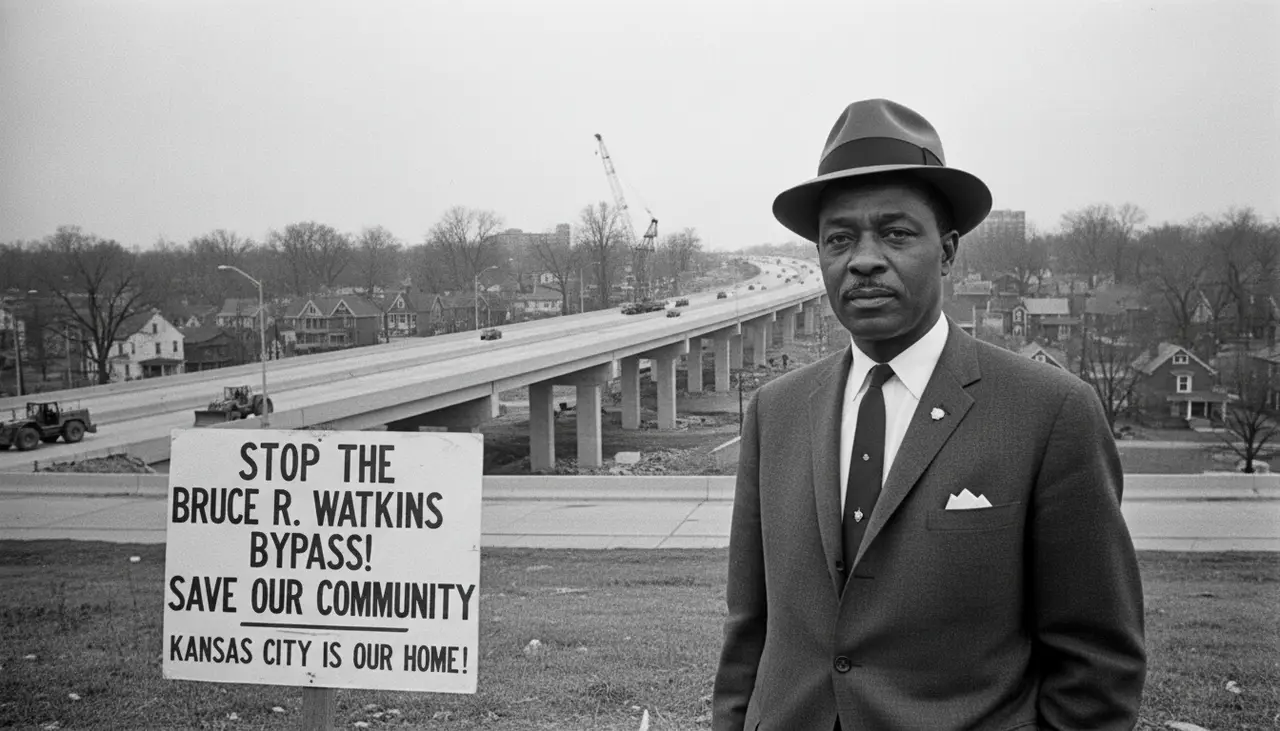
Bruce R. Watkins, a Kansas City native, Tuskegee Airman, and one of the city’s early Black council members, fiercely opposed the construction of Highway 71. He called it “Kansas City’s Berlin Wall” for good reason — the highway physically divided neighborhoods and cut off communities from economic opportunity. Despite his opposition, a large stretch of Highway 71 was built and later renamed Bruce R. Watkins Drive in his honor. Watkins also founded the political organization Freedom, Inc., and in 1979, he became the first African American candidate to mount a competitive mayoral campaign in Kansas City.
On Sunday, Feb. 15 at 2 p.m., Emiel Cleaver, executive director of the Bruce R. Watkins Cultural Heritage Center and Museum, will speak at the Kansas City Public Library’s Central Branch about Watkins’ legacy. Cleaver, whose father Emanuel Cleaver II served as Kansas City’s mayor from 1991 to 1999, will join Jeremy Drouin, special collections manager at the library, in unpacking the lasting impact of Watkins’ activism.
Why This Matters Locally
Highway 71, or Bruce R. Watkins Drive, is more than just a road. It’s a daily obstacle for thousands of Kansas Citians. The highway’s construction severed the Paseo and Troost neighborhoods, creating long-term consequences for safety, housing, and traffic flow.
For residents living near 31st Street, Troost Avenue, and Prospect Avenue, this means longer commutes and increased stress. Emergency services frequently report delays in reaching homes east of the highway due to limited access points. Homeowners on the east side face declining property values because the highway cuts off businesses and job opportunities found just a few blocks west.
Traffic congestion on Bruce R. Watkins Drive spikes during rush hours, putting additional wear on local streets like 27th Street and Woodland Avenue as drivers seek alternate routes. This strain causes more potholes and road damage, increasing repair costs for city and county budgets — costs that ultimately trickle down to taxpayers.
Ignoring these issues can lead to worsening neighborhood decline and further economic disparity. Residents who don’t stay informed about changes to the highway or upcoming construction projects risk being caught off guard by detours, road closures, or sudden increases in commute times.
If This Happens to You: What to Do Immediately
- Monitor local traffic updates regularly, especially if your daily route crosses Bruce R. Watkins Drive near 31st Street or 39th Street.
- Keep emergency numbers handy and know alternative routes to hospitals and fire stations, particularly if you live east of the highway near Troost Avenue.
- Document any property damage caused by highway construction or increased traffic on your street. Take photos and keep a detailed log of dates and incidents.
- Attend local community meetings or city council sessions discussing highway maintenance or neighborhood development plans.
- Contact your neighborhood association or the Bruce R. Watkins Cultural Heritage Center for updates on advocacy efforts and resources.
- Communicate with your insurance provider if you experience property damage or vehicle incidents related to road conditions.
- Reach out to city planning offices if you notice unsafe pedestrian crossings or traffic signals malfunctioning near your home.
When Local Professional Help Becomes Necessary
Not every problem can be solved on your own. If you experience significant property damage from road construction or traffic accidents linked to Bruce R. Watkins Drive, you need to contact a legal professional experienced in municipal and property law. They can advise you on compensation claims or disputes with contractors.
If your home or business suffers structural damage from vibrations or increased traffic, hire licensed contractors to assess and repair the damage promptly. Delaying repairs risks further deterioration and higher costs.
For residents seeking to influence future city planning or highway projects, professional urban planners or community advocates can help you navigate complex zoning laws and public hearings. Their expertise is critical in making your voice heard in city hall.
Finally, if you’re dealing with ongoing traffic safety issues or infrastructure failures, contact local repair services to report problems and request prompt fixes. Persistent road hazards require professional intervention to avoid accidents or injuries.
Local Context
Bruce R. Watkins Drive is a daily reality for thousands of Kansas Citians, especially those in the Midtown and Troost neighborhoods. Whether you live near the 18th and Vine Historic District or commute through the East Side, this highway impacts your safety, time, and property value. Watkins’ warning about the highway becoming a dividing wall is still relevant today. Residents need to stay informed, prepared, and ready to act to protect their communities from further harm.
Where This Is Happening in Kansas
The stretch of Bruce R. Watkins Drive between 27th Street and 39th Street slices through the heart of Kansas City’s Midtown and Troost neighborhoods. Nearby streets like Prospect Avenue and Woodland Avenue serve as alternative routes when traffic backs up on the highway. The 18th and Vine Historic District, a landmark of Black cultural heritage, lies just north of this area, while the Bruce R. Watkins Cultural Heritage Center stands as a reminder of the man who fought the highway’s construction.
Locals pass through this corridor daily—whether commuting to downtown jobs, visiting the Kansas City Public Library’s Central Branch, or attending events at the nearby Liberty Memorial. The highway’s presence affects not just traffic patterns but the social and economic fabric of these connected neighborhoods.