Demolition Begins at Parade Park Homes: What Kansas City Residents Need to Know Now
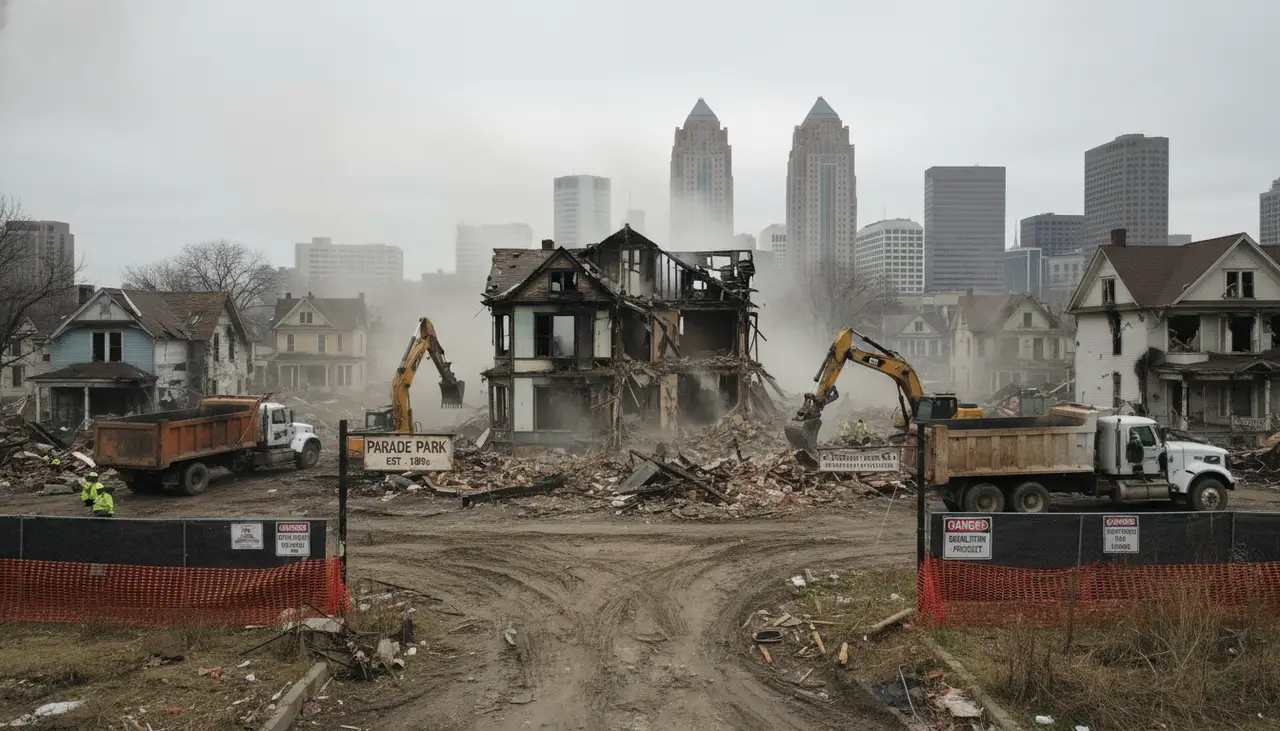
Just after 7 a.m. last Tuesday, crews rolled onto the block near the intersection of Admiral Boulevard and Woodland Avenue in the Historic Northeast neighborhood. The familiar sight of boarded-up homes and empty lots at Parade Park Homes is now changing as demolition equipment began tearing down the old buildings. The air carries the sharp scent of dust and charred wood, reminders of the dozen-plus fires that have ravaged the site since last Thanksgiving. For residents in nearby Pendleton Heights and 18th and Vine, the noise and activity are hard to ignore.
What’s Happening at Parade Park?
The long-delayed redevelopment of Parade Park Homes is finally underway. After a groundbreaking delay in October 2022, the demolition phase began this month. Mayor Quinton Lucas confirmed on KCUR’s Up to Date last week that bureaucratic hold-ups around state and federal permits caused the delay. “We’ve had too many fires there lately,” Lucas said. “As we’ve gone through some winter challenges, I thought it was necessary that we do that key step of demolition and let people see what is coming next.”
The site, located just east of the Historic 18th and Vine district, was once the nation’s oldest Black-owned housing cooperative. But years of neglect, mold, leaking roofs, and conflict between residents and management led to severe deterioration. HUD took over in 2022 and foreclosed in 2023. Kansas City then purchased the property and handed it over to Flaherty & Collins Development and Twelfth Street Heritage Corporation to lead a $300 million redevelopment.
The plan calls for more than 1,100 new apartments, townhomes, and flats. Nearly half—490 units—will be affordable for households earning 30% to 60% of the median family income. Another 535 apartments will serve residents making between 60% and 80%. Additionally, 60 units will be available for ownership, including senior housing and market-rate options. The project also includes retail and office space, aiming to revitalize the area around 18th and Vine, where the Negro Leagues Baseball Museum is moving to the Buck O’Neill Education Center and the American Jazz Museum is expanding.
Why This Matters to You
If you live, work, or commute near Parade Park, this redevelopment will affect your daily life—and not just in the long term. The ongoing demolition and future construction will bring noise, dust, and traffic disruptions along Woodland Avenue, Admiral Boulevard, and nearby streets like Prospect Avenue and E. 19th Street. Expect delays during peak hours, especially for those using the 18th and Vine streetcar line, which the city is studying for east-west expansion.
For renters and homeowners in Pendleton Heights and the Historic Northeast neighborhood, the project offers hope for safer, stable, and affordable housing options. But until completion, which is not expected until 2027 for the first phase, the area remains a hotspot for fires and property damage. Residents near Parade Park face real risks from lingering structural hazards and potential displacement pressures as redevelopment progresses.
Ignoring these risks could mean your household faces sudden safety threats or financial strain. Fires at the site have already forced some residents to leave abruptly. If you’re renting near the area, your landlord’s ability to maintain safe living conditions may be compromised as construction noise and dust increase. Traffic congestion could add hours to your daily commute, affecting work schedules and childcare arrangements.
If You’re Impacted: What To Do First
- Monitor local news and city announcements closely for updates on demolition and construction schedules affecting your street.
- Document any damage to your property caused by dust, vibrations, or debris from demolition work. Take photos and videos immediately.
- Report unsafe conditions to Kansas City’s 311 service or your neighborhood association without delay.
- Check your lease or mortgage documents for clauses related to construction disruptions and notify your landlord or lender of any issues.
- Plan alternative routes for commuting to avoid delays on Woodland Avenue, Admiral Boulevard, and Prospect Avenue.
- Stay in touch with local community groups like the Twelfth Street Heritage Corporation for resources and support.
- Prepare for possible temporary relocation if your home is near the demolition zone and becomes unsafe.
When You Need Professional Help
If you encounter property damage or health issues linked to the demolition, professional intervention is essential. Contact a licensed contractor to inspect your home for structural damage or mold caused by dust and debris. If your landlord or property management fails to address safety concerns, you need to consult a housing lawyer immediately to protect your rights.
For those facing displacement or lease termination due to redevelopment, legal assistance becomes necessary to navigate tenant protections and relocation benefits. If your daily commute is severely disrupted, a professional urban planner or transportation consultant can help you understand long-term changes and alternative transit options.
Contractors and repair services will be in high demand as the project progresses. Don’t wait until damage worsens—early professional assessment can save you money and stress. If you suspect hazardous materials like asbestos during demolition, only certified abatement specialists should be involved.
Back to Kansas City: What’s Next for the Neighborhood
Parade Park’s redevelopment is a critical piece of a broader transformation near 18th and Vine. With the Negro Leagues Baseball Museum’s move to the Buck O’Neill Education Center and expansion plans for the American Jazz Museum, the area is poised for renewed cultural and economic activity. The city’s $20 million investment, combined with $15.5 million in federal grants and a 30-year property tax break, signals a serious commitment to revitalization.
But for residents in Pendleton Heights, Historic Northeast, and surrounding neighborhoods, the coming years will bring significant disruption before benefits arrive. This is not just a construction project—it is a test of how Kansas City balances growth with affordability and community stability. Mayor Quinton Lucas has emphasized the need to avoid gentrification while improving safety and accessibility. How well that balance is struck will impact thousands of Kansas Citians who live and work near this historic corridor.
Where This Is Happening in Kansas
The Parade Park redevelopment site sits just east of the Historic 18th and Vine district, bordered by Woodland Avenue to the west and Admiral Boulevard to the south. Nearby streets affected include Prospect Avenue and E. 19th Street, all within the boundaries of the Historic Northeast and Pendleton Heights neighborhoods.
Thousands of Kansas Citians pass through this area daily—whether heading to work downtown via the streetcar line, visiting the Negro Leagues Baseball Museum, or commuting through the busy intersections of Woodland and Admiral. The city’s ongoing infrastructure improvements, including a new parking garage and potential streetcar expansion, will add layers of change to this corridor. Residents along these streets should expect increased construction traffic, road closures, and prolonged noise in the months and years ahead.